
Trace Former Owners of a Barron County Property
A reverse chain reads best one transfer per row. Each row shows the fields to collect. It is not a sample title history. Pull the actual instrument number, book and page, and legal description from every deed you handle. The land description is your safety check against a same-name owner or a neighboring lot slipping into the chain.
| Transfer date | Grantor to grantee | Instrument | Recording reference |
|---|---|---|---|
| Latest deed | Prior owner to current grantee | Recorded conveyance | Document number or book/page |
| Earlier deed | Earlier grantor to prior grantee | Deed or land contract | Match legal description |
| Older transfer | Earlier party to earlier party | Recorded instrument | Check parcel and map references |
For each former owner, note the recording date, parties, instrument type, document number, full legal description, and any transfer return or consideration field visible on the deed. That discipline turns a bare name list into a traceable chain. Names alone prove nothing.
Walk the Barron County Deed Chain in Reverse
Start with the current parcel ID and legal description from Beacon or the assessment roll. Find the newest conveyance in Tapestry EON. Note the grantee and recording reference. Search that grantee as grantee in the earlier index, confirm the next deed covers the same legal description, and repeat with the earlier grantee. Hit a wall? When a name variant or an entity suffix blocks the next step, search both parties.
- Locate the parcel and retain its legal description.
- Find the newest deed and confirm its grantee.
- Search that name as a grantee for the prior conveyance.
- Check each description, parcel reference and recorded date.
- Move to books or microfilm when the online index stops.
Keep mortgages and satisfactions on a separate side list unless they explain a transfer or a title event. Former owners come from conveyances. A tax bill or directory entry is not a deed.
The Barron County Former Owner Cutoff Keeps Moving
The Barron County Register of Deeds warns that the earliest index and image dates shift daily. Staff keep back-indexing older records. A 2025 county update counted more than 79,776 older documents added since March 2020. Of those, 11,465 landed in 2024 alone. No fixed online year serves as a dependable endpoint for property records. Call the Register at (715) 537-6210 for the current cutoff. Do not assume a missing prior owner signals a gap in the deed chain.
Tapestry EON is the county-linked electronic search route for deed records. Its current fields, image limits, result cap, and pricing are not listed in text form. Confirm those details in the live portal. The Register does not run real-estate searches for the public. Bring your own names, parcel ID, description, and known references.
The county links its current electronic recorder index through its official site.
Open Tapestry EON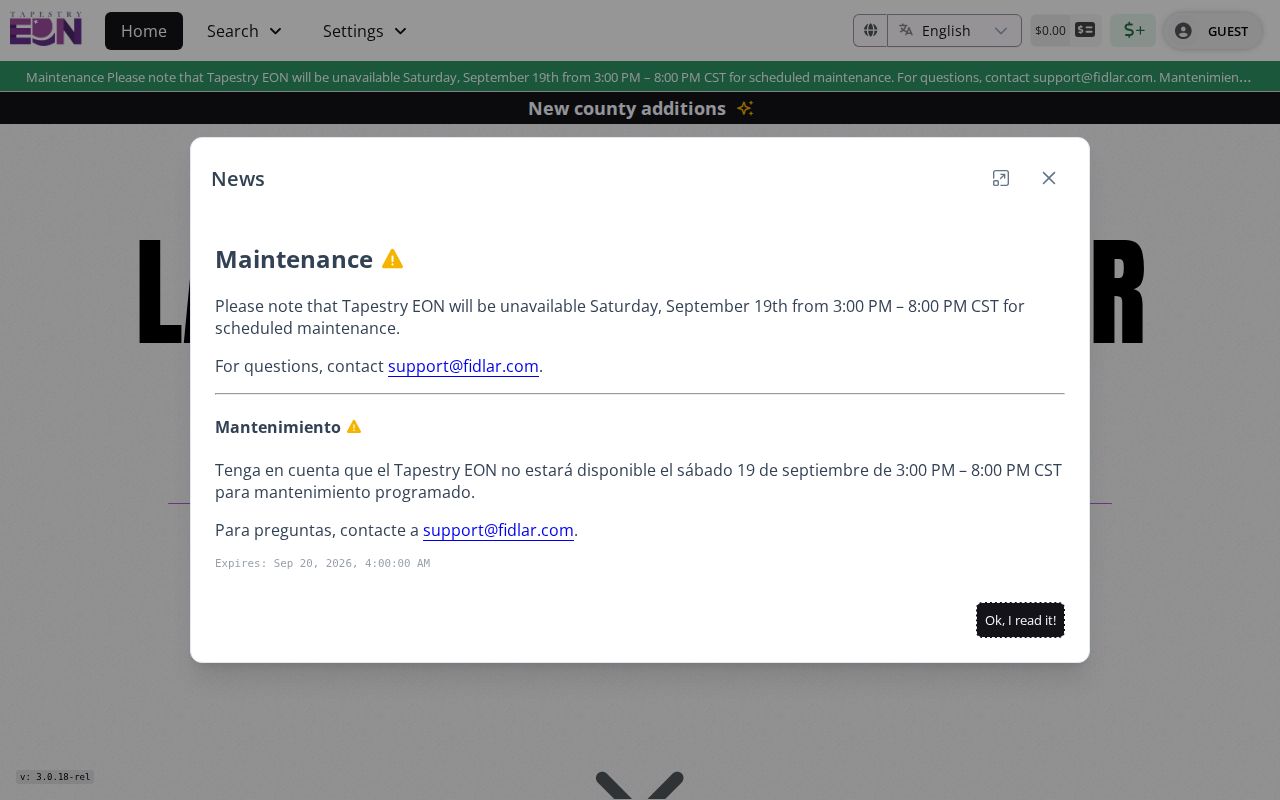
Note: Use the current index date as a moving research boundary and record the date the cutoff was checked.
Where Older Barron County Former Owners Are Found
At the historical edge of a web search, the county's ownership books, vault, and microfilm take over. Local research hours run weekdays from 8:00 to 4:00. Rules are strict. Use pencils only. Go straight to the requested volume and page; paging through books is not allowed. Cameras and private copiers are barred from the vital-record area. Those rules reward arriving with solid names, dates, and land references.
The county's historic-research page lists property ownership, surveys, U.S. land patents, and the 1903 and 1927 plat maps. FamilySearch may hold digitized material. Coverage varies, so check rather than assume. If the name trail breaks, pivot. Search the legal description, lot and block, CSM, or section-township-range to bridge back to an index reference.
See historic land-record access information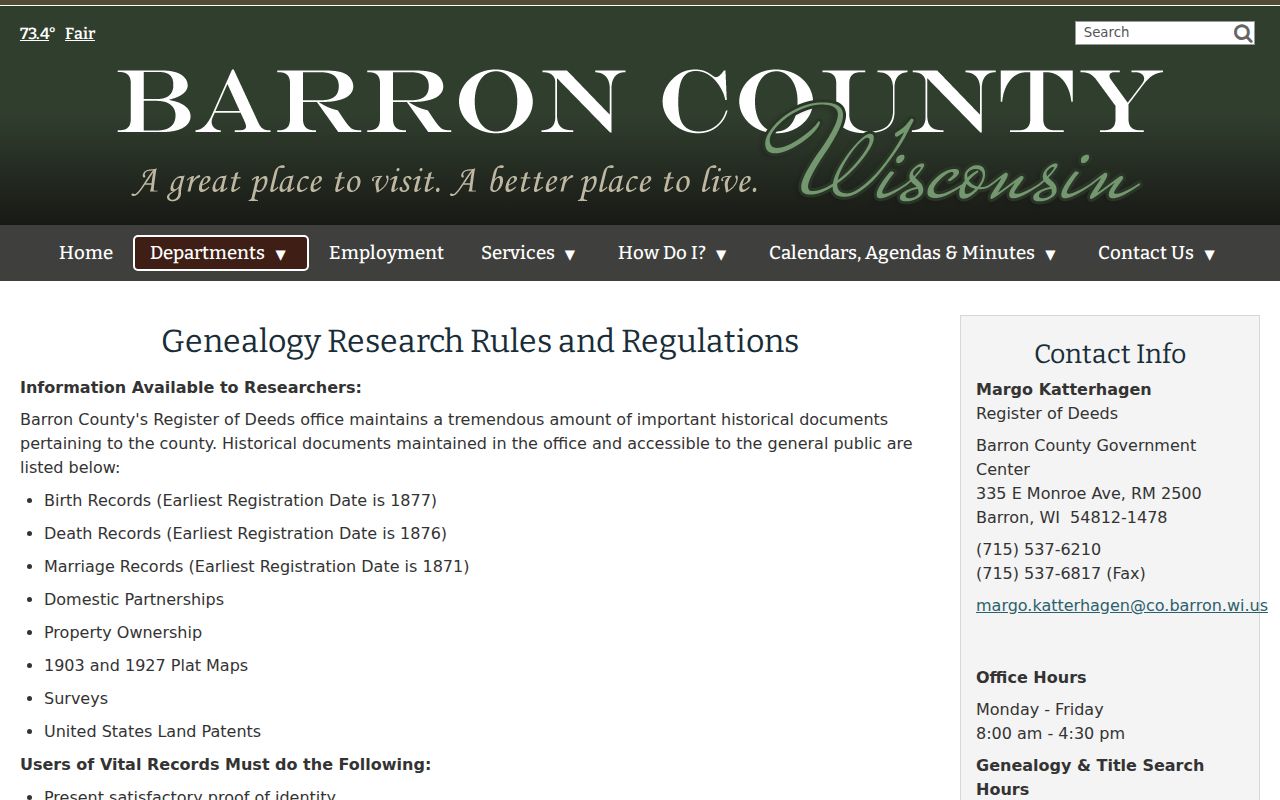
Use the custodian’s own volume and access rules to plan a targeted visit.
Use a Barron County Legal Description to Bridge Names
A chain can look broken for mundane reasons. A grantee may sit in the index under initials or punctuation. She may appear under a former surname or an entity suffix. Try the reasonable variants first. Then anchor the search with hard facts. Use the parcel number or book and page. Lot and block, plat name, or a written legal description also work. Barron County Survey Search works best with Town-Range-Section. Recorded CSMs, plats, and condominium material are absent from that GIS layer.
A plat reference can beat a modern street number as a clue for historic city lots. Barron's 1880 village plat and Rice Lake's plats of 1870, 1875, and 1884 point to distinct local mapping histories. Cumberland's shoreline and PLSS descriptions point to another. Confirm the actual map in the recorded source first. Treat it as part of the legal chain only after that.
Historic Maps Help Date Barron County Ownership Clues
The Wisconsin Historical Society's 1888 Barron County atlas holds 73 pages of village, city, and township plates, digitized for online viewing. The county keeps 1903 and 1927 plat references. The City of Barron's 1880 plat and 1887 incorporation, Rice Lake's three founding plat eras, and older county survey material can decode a stubborn name or lot reference. Maps date clues. They do not replace the deed record.
For directories and newspapers, ask the public library and the Historical Society catalog. They can check exact year runs, reverse directories, newspaper microfilm, and obituary indexes for Barron and Rice Lake. One caution applies. A directory occupant is not a former owner. Residence and ownership are different facts.
Probate Can Explain a Barron County Chain Break
Death breaks more Barron County chains than anything else. When an owner died, the land could move several ways. It might pass through probate, a transfer-on-death deed, a survivorship affidavit, a personal-representative deed, a trustee deed, or a court-approved sale. The death record proves the event itself. The estate file and the recorded instrument explain how the property actually changed hands. For estate material in Barron County, the Register in Probate and the circuit clerk are the starting custodians. Case access rules apply.
Check the current tax roll too. It may still list a decedent as owner of record. Look for the later conveyance. Treat its grantee as the next link in the chain. Probate records, WCCA, and the Register of Deeds each carry a different piece of the transfer story. Pair the recorded deed reference with the case number. A case summary alone never proves a deed was filed.
Keep Each Barron County Prior Owner Reference
A good chain note earns its keep later. Record the source, search date, index range, instrument type, recording date, parties, document number, book and page, parcel ID, and legal description. Add any map or CSM the deed cites. If the online index date moves, your note shows whether a later search reached farther back than an earlier one. That level of detail lets another researcher repeat the work without tripping over a similarly named person or an adjoining parcel.
Keep the chain in perspective. It is not an appraisal, a boundary survey, or a guarantee of marketable title. For one certified deed copy, follow the Register of Deeds copy instructions. For an opinion on the chain itself, rely on a qualified title professional. The backward chain answers only one question: how each recorded grantee took the interest, as far as the consulted property records support.
How Far Barron County Former Owner Records Can Reach
There is no single promised year. How far Barron County deed records reach depends on the moving online index date. It also depends on which local volumes survive. Call the Register of Deeds for the current online edge. When a deed sits outside the portal, ask which book, vault, or microfilm route covers that period. The county's historic collection and its 1888 atlas add helpful context. But neither substitutes for the deed book itself.
A name trail is not a title opinion. Verify each transfer against the original instrument and legal description. Do not use former-owner information to threaten, track or harass a person.